

Brake Pad Manufacturing Process: From Raw Materials to Final Inspection
Brake pads are one of the most important safety components in any vehicle. Whether installed on a passenger car, light truck, heavy-duty truck, bus, or electric vehicle, they must provide consistent stopping power under a wide range of driving conditions. A high-quality brake pad is the result of advanced engineering, carefully selected raw materials, precision manufacturing, and rigorous quality control.
China has become one of the world’s leading producers of automotive brake pads, supplying products to importers, distributors, wholesalers, fleet operators, and OEM brands across the globe. Modern Chinese manufacturing facilities combine automated production lines, experienced engineers, and strict inspection procedures to produce reliable brake pads that meet international standards.
This article explains the complete brake pad manufacturing process, helping buyers understand how premium brake pads are made and why choosing the right manufacturer is essential.
Why the Manufacturing Process Matters
The quality of a brake pad depends on far more than its appearance. Every stage of production—from selecting raw materials to final testing—has a direct impact on braking performance, durability, noise levels, heat resistance, and driver safety.
A professionally manufactured brake pad offers:
Reliable stopping power
Stable friction performance
Reduced brake noise
Lower brake dust
Excellent wear resistance
Long service life
Better rotor protection
Manufacturers that invest in advanced equipment and quality control deliver products that perform consistently in demanding driving conditions.
Step 1: Selecting High-Quality Raw Materials
Everything begins with the right materials. Brake pad performance is largely determined by the friction compound used during manufacturing.
A typical brake pad may contain a carefully engineered combination of:
Friction modifiers
Reinforcing fibers
Metallic or mineral materials (depending on the formulation)
Graphite
Ceramic components (for ceramic brake pads)
Binders and resins
Lubricants
Fillers
Each ingredient has a specific purpose. Some improve heat resistance, others reduce wear, minimize noise, or enhance braking stability.
Reliable manufacturers source raw materials from trusted suppliers and inspect every shipment before it enters production.
Step 2: Incoming Material Inspection
Before production begins, all raw materials are inspected to verify they meet the manufacturer’s quality requirements.
Inspection may include:
Material identification
Moisture content
Particle size
Purity
Storage condition
Batch traceability
Maintaining strict control over incoming materials helps ensure consistent product quality from one production batch to the next.
Step 3: Precision Mixing of Friction Materials
Once approved, the raw materials are accurately weighed according to the manufacturer’s proprietary formulation.
Computer-controlled mixing equipment is commonly used to achieve a uniform blend. Proper mixing ensures that each brake pad provides consistent friction characteristics.
This stage is especially important because uneven mixing can lead to inconsistent braking performance, increased noise, or premature wear.
Step 4: Preparing the Steel Back Plate
The steel back plate forms the structural foundation of the brake pad.
Before bonding the friction material, the back plate is prepared through several processes:
Cleaning
Surface treatment
Rust removal
Coating (where required)
Application of adhesive bonding agents
A properly prepared back plate ensures a strong bond between the steel plate and the friction material, helping prevent separation during service.
Step 5: Hot Pressing and Molding
The mixed friction material is placed into molds together with the prepared back plates.
Using hydraulic presses, the material is compressed under carefully controlled pressure and temperature. This process shapes the brake pad and firmly bonds the friction material to the steel backing.
Modern automated production lines help maintain dimensional accuracy and consistency throughout large production runs.
Step 6: Heat Curing
After pressing, the brake pads undergo a controlled heat-curing process.
Heat curing allows the resin within the friction material to fully harden, increasing the brake pad’s mechanical strength and durability.
Proper curing contributes to:
Stable friction performance
Better heat resistance
Longer product life
Improved structural integrity
The curing cycle is carefully monitored to achieve consistent results.
Step 7: Grinding and Thickness Calibration
After curing, the brake pads are ground to their final dimensions.
Precision grinding ensures:
Accurate thickness
Flat friction surface
Proper fitment
Consistent contact with the brake disc
Maintaining tight dimensional tolerances helps reduce installation issues and improves braking performance.
Step 8: Slotting and Chamfering
Many premium brake pads include slots and chamfers.
Slots help remove dust, gases, and debris generated during braking.
Chamfers smooth the initial contact between the brake pad and rotor, helping reduce vibration and brake noise.
The exact design varies depending on the vehicle application and customer requirements.
Step 9: Surface Finishing and Coating
Brake pads may receive protective coatings or surface treatments to improve corrosion resistance and enhance appearance.
Depending on customer specifications, manufacturers may also apply:
Anti-corrosion coatings
Identification markings
Laser engraving
Product labels
Batch numbers
These markings improve traceability and quality management.
Step 10: Installing Shims (Where Required)
Many modern brake pads include noise-reducing shims attached to the back plate.
High-quality shims help:
Reduce vibration
Minimize brake squeal
Improve driving comfort
Enhance overall braking performance
Different shim materials and designs are selected according to vehicle requirements.
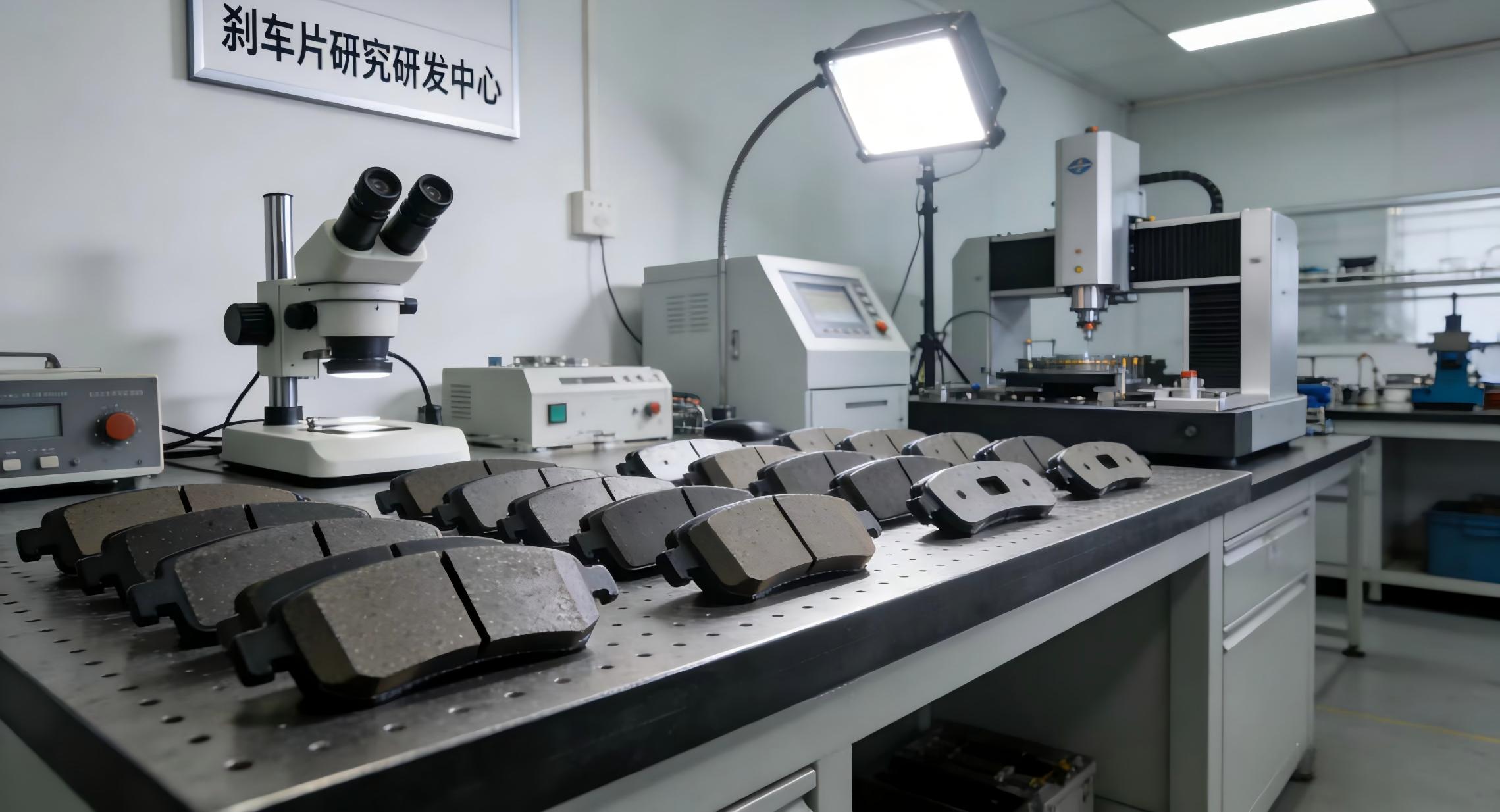
Step 11: Comprehensive Quality Testing
Before shipment, brake pads undergo multiple quality inspections.
Typical tests include:
Dimensional Inspection
Ensures every brake pad meets design specifications.
Bond Strength Test
Confirms the friction material is securely bonded to the steel back plate.
Hardness Test
Measures material consistency.
Friction Performance Test
Evaluates braking performance under different operating conditions.
Heat Resistance Test
Assesses stability during high-temperature braking.
Wear Test
Measures service life under simulated operating conditions.
Noise and Vibration Evaluation
Helps ensure quieter braking and improved driver comfort.
Reliable manufacturers document these inspections to maintain consistent quality.
Step 12: Final Visual Inspection
Before packaging, trained inspectors examine every production batch.
Inspection includes:
Surface finish
Paint quality
Correct labeling
Product markings
Packaging accuracy
Overall appearance
Only products meeting quality standards proceed to packaging and shipment.
Step 13: Packaging and Export Preparation
Packaging protects brake pads during transportation and storage.
Manufacturers typically offer:
Standard export cartons
OEM packaging
Private label packaging
Customized branding
Barcode labels
Instruction sheets
Strong export packaging reduces the risk of damage during international shipping.
Supporting OEM and Private Label Customers
Many global distributors sell brake pads under their own brand names. A reliable manufacturer can provide complete OEM and private label services, including custom packaging, logo printing, product labeling, and marketing support.
This allows customers to build a recognizable brand while relying on an experienced manufacturing partner for production.
Sustainability in Brake Pad Manufacturing
Environmental responsibility is becoming increasingly important in the automotive industry.
Many modern manufacturers focus on:
Efficient production processes
Responsible waste management
Energy-saving equipment
Low-emission manufacturing
Compliance with environmental regulations where applicable
These efforts support both sustainability and long-term product quality.
Choosing the Right Manufacturing Partner
When selecting a brake pad manufacturer, buyers should consider more than price.
Evaluate the supplier’s:
Manufacturing experience
Production capacity
Quality management system
Technical expertise
Testing capabilities
Export experience
Customer service
OEM support
A dependable manufacturer helps ensure consistent quality and long-term business success.
Conclusion
Manufacturing a high-quality brake pad requires precision at every stage—from raw material selection and mixing to pressing, curing, machining, testing, and final inspection.
Each process contributes to the product’s safety, durability, and braking performance. Buyers who understand the manufacturing process are better equipped to choose suppliers that prioritize quality and consistency.
Working with an experienced brake pad manufacturer gives importers and distributors confidence that every shipment meets their expectations for performance, reliability, and value.
Frequently Asked Questions
What is the most important stage in brake pad manufacturing?
Every stage is important, but raw material selection, precision mixing, hot pressing, and quality testing have the greatest influence on braking performance.
Why is quality testing essential?
Quality testing verifies that brake pads meet performance requirements for safety, durability, wear resistance, and consistent braking under different operating conditions.
Can manufacturers produce custom brake pads?
Yes. Many manufacturers provide OEM and private label services, including customized packaging, branding, labeling, and product specifications.
Request a Quote
If you are looking for a reliable brake pad manufacturing partner in China, we are ready to help.
We manufacture high-performance brake pads for passenger cars, buses, light trucks, heavy-duty trucks, and electric vehicles. Our team is committed to strict quality control, dependable production, OEM and private label services, and timely global delivery.
Contact us today to request a quotation, product catalog, or discuss your OEM manufacturing requirements.